
The REAL COATBUSTERS™: Why More Businesses Are Turning to Laser Cleaning Instead of Traditional Coating Removal

Updated: May 28

Over the last several years, businesses across manufacturing, restoration, transportation, construction, and fabrication have been forced to rethink how they maintain equipment and infrastructure.
Material costs continue to rise.
Supply chains remain unpredictable.
Tariffs on steel and industrial materials continue to affect pricing and availability.
At the same time, replacing components has become significantly more expensive than it once was. In this kind of environment, preserving what you already have becomes more important than ever.
That shift is one of the biggest reasons laser cleaning technology is gaining traction across industries that traditionally relied on grinding, blasting, chemicals, or abrasive methods for coating and surface removal.
More Than Just “Rust Removal”
Laser cleaning is often associated with rust removal videos online, but the technology goes far beyond that.
Modern laser systems are capable of removing:
Paint
Powder coating
Oxidation
Grease and buildup
Mill scale
Carbon contamination
Surface residues
Industrial coatings
The key difference is how the process works.
Unlike blasting or grinding, laser cleaning is highly controlled. Instead of aggressively removing material from the base surface, the laser targets contamination and coatings based on how they absorb energy. This allows coatings to be removed while preserving the underlying substrate with an extremely high level of precision.
Why Traditional Methods Are Becoming Harder to Justify
Conventional coating removal methods absolutely still have their place. But they also come with tradeoffs that are becoming more significant as operational costs continue to rise.
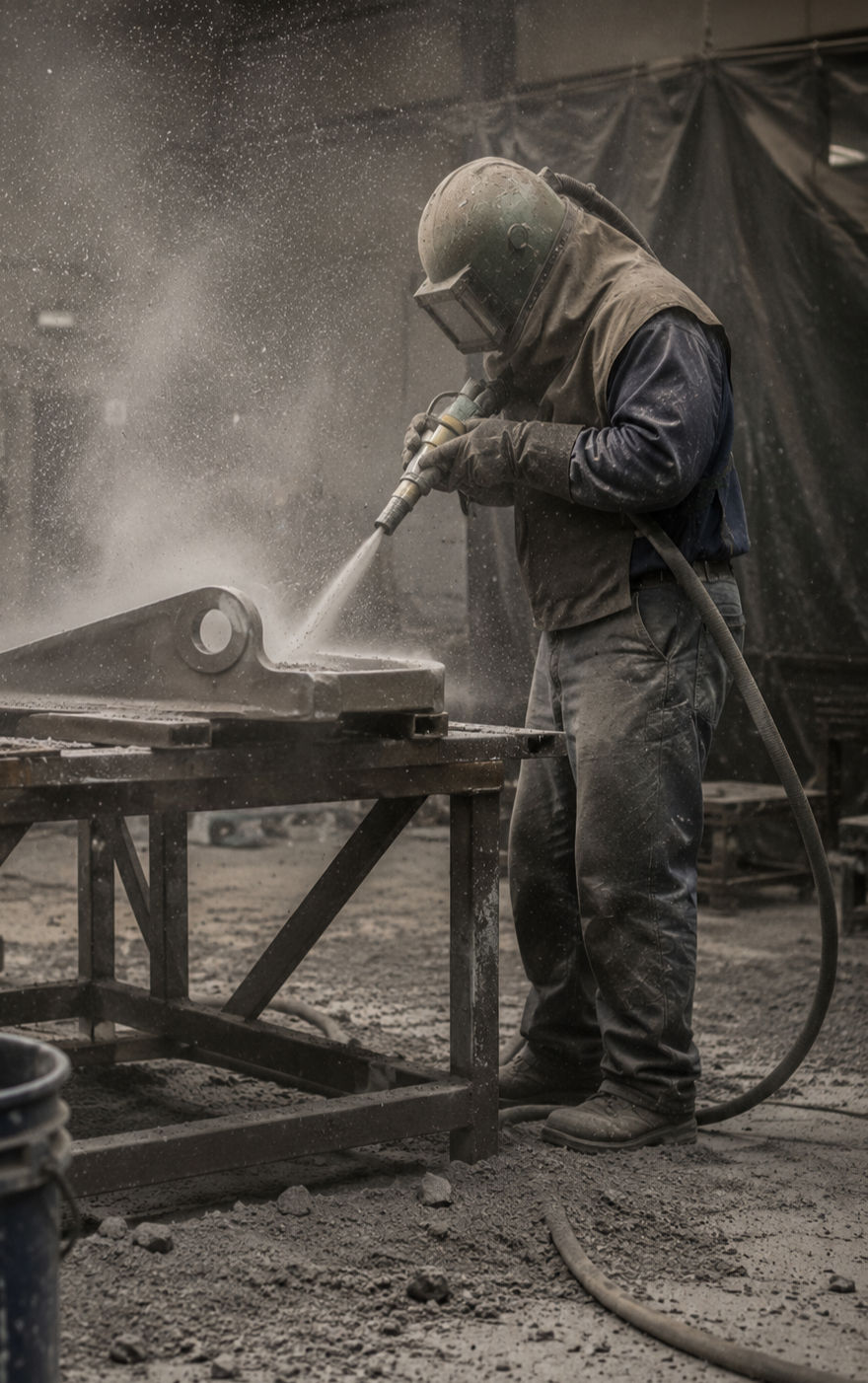
Grinding and blasting:
remove material alongside the coating
create secondary waste
require cleanup and containment
increase labour requirements
introduce inconsistency depending on the operator
Chemical stripping introduces its own challenges:
disposal requirements
environmental concerns
safety considerations
downtime
surface compatibility limitations
When material and replacement costs were lower, many of these inefficiencies were easier to absorb. Today, they are far more visible.
Precision Matters More Than Ever
As industries move toward extending the life of equipment instead of replacing it, precision surface preparation becomes increasingly important.

Laser cleaning allows businesses to:
selectively remove coatings without aggressive abrasion
preserve delicate details and machined surfaces
reduce unnecessary material loss
minimize secondary waste
perform work directly on-site in many situations
reduce teardown and preparation time
For restoration work, this becomes especially valuable.

In many cases, blasting or aggressive sanding can soften details, damage edges, or remove material that cannot be replaced. Laser cleaning offers a much more controlled approach, particularly for detailed metalwork, fabricated components, tooling, and historic or high-value pieces.
In fact, laser technology is precise enough that it can be used to selectively remove individual pigments from paper or canvas.
The REAL COATBUSTERS™
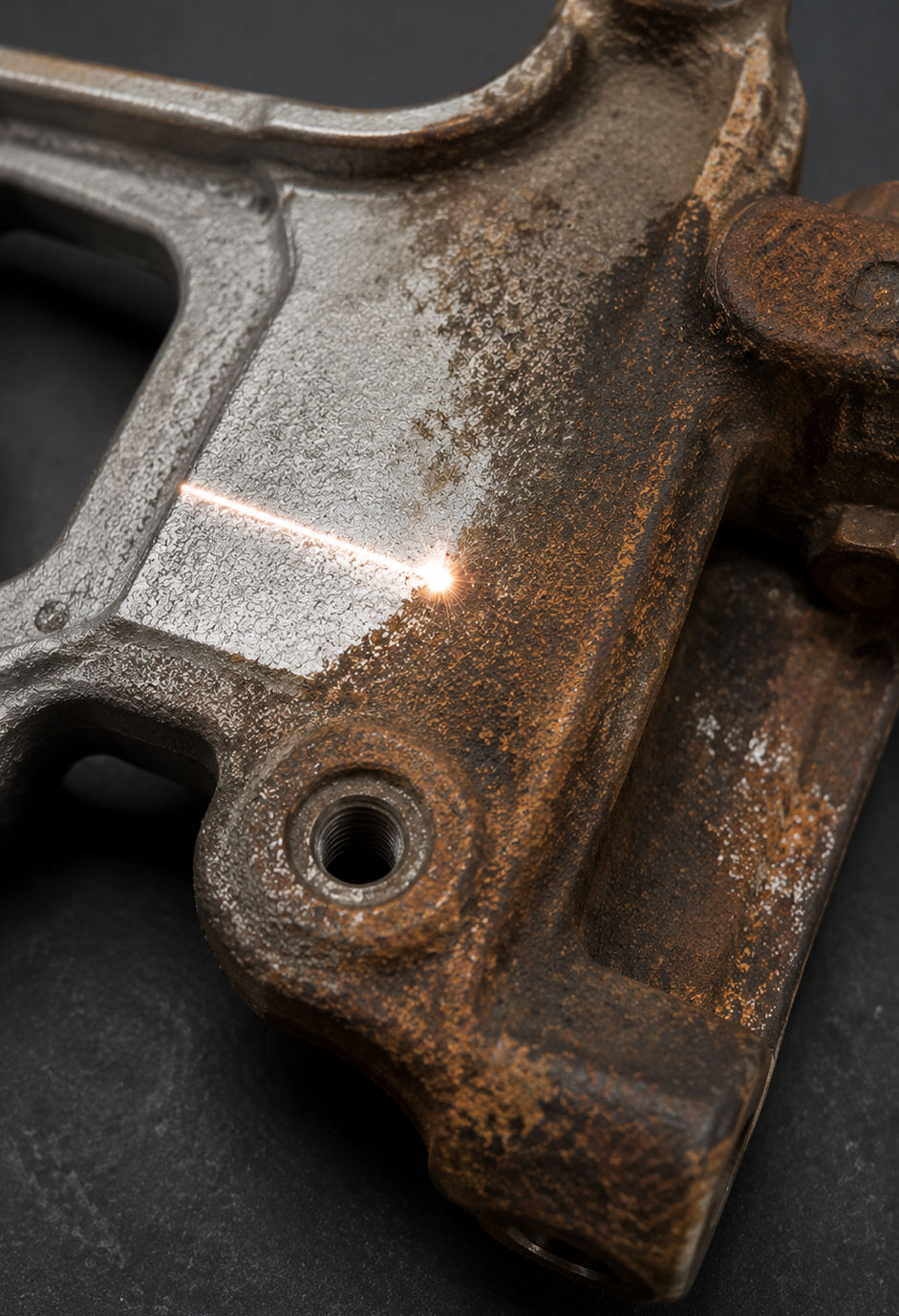
Coatings exist for a reason; paints, primers, powder coatings, galvanization, and protective finishes all play an important role in extending the life of metal and protecting it from environmental exposure.
But every coating has an expiry date.
Over time, moisture, salt, heat, UV exposure, vibration, and contamination can cause coatings to crack, separate, trap corrosion underneath, or lose adhesion entirely. In many cases, the damage happening beneath the surface is far worse than what is visible externally. Removing those failed layers properly becomes critical - especially when the goal is to preserve the underlying material rather than needing to replace it.
Removing failed coatings is one thing. Preserving what’s underneath is another entirely.
Businesses already understand the problems coatings and contamination create over time:
corrosion beneath painted surfaces
oxidation and environmental buildup
failing or uneven coatings
excessive prep work before refinishing
contamination affecting welds or adhesion
expensive replacement cycles caused by surface deterioration
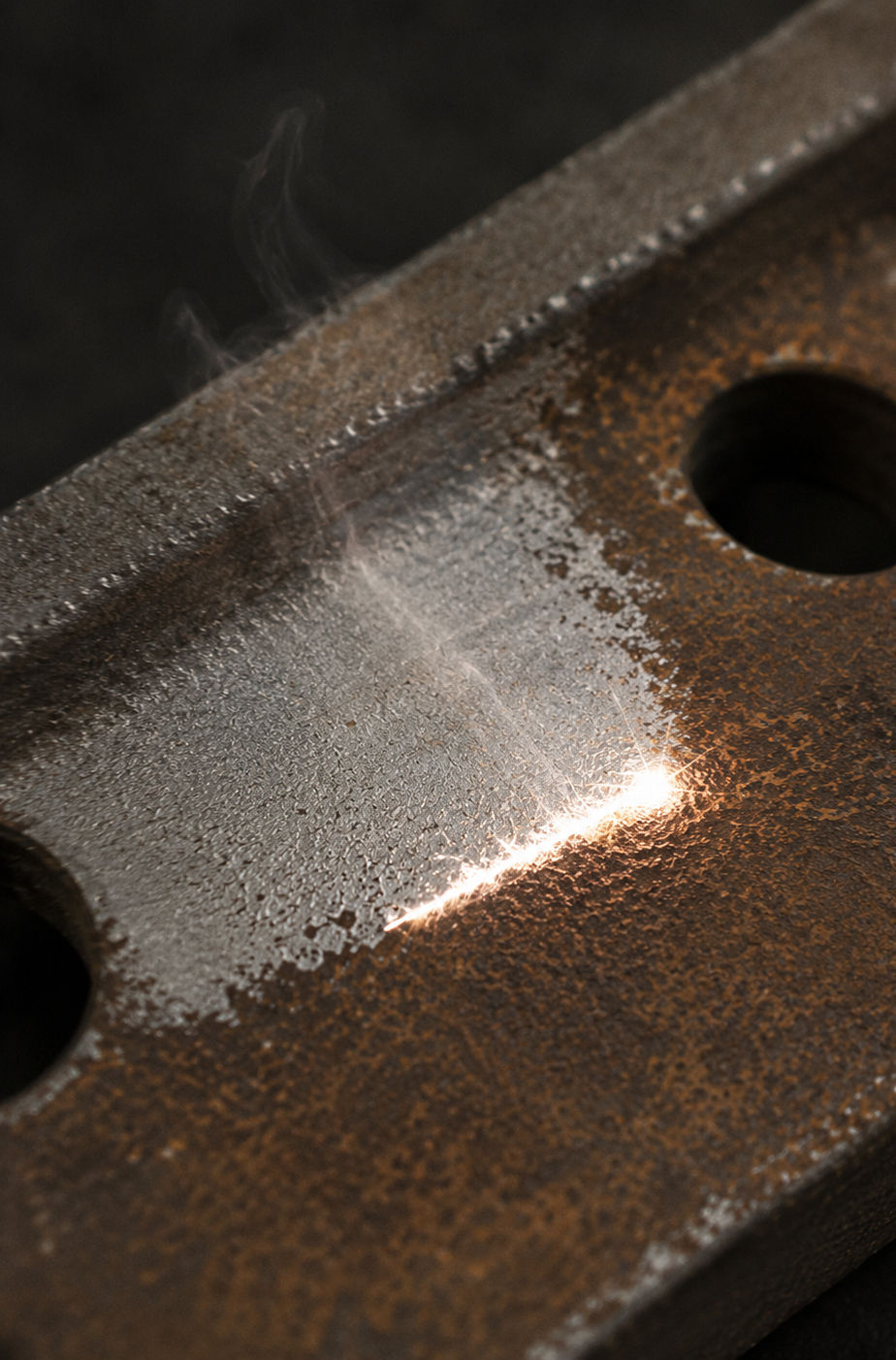
What surprises people most is how controlled the solution can be. Once coatings, rust, and buildup start disappearing in real time - without blasting media, chemicals, or heavy abrasion - the applications become immediately obvious.
Watching coatings disappear in real time without damaging the underlying material changes the conversation from “How do we replace this?” to “How do we preserve it?”
That mindset is becoming increasingly important in today’s economy.
Maintain More. Replace Less.
The future of industrial maintenance and restoration is not about doing more work.
It’s about doing the work more precisely.
As costs continue to rise across materials, transportation, labour, and equipment, businesses that focus on preservation, precision, and operational efficiency will be in a much stronger position moving forward.
Laser cleaning is not just another cleaning method.
For many applications, it represents a completely different approach to how coatings, contamination, and surface preparation are handled altogether.
Interested in seeing the process firsthand?
Rydex Laser offers on-site demonstrations throughout Ontario.


Comments