
Rust Doesn’t Have to Mean Replace: Laser Rust Removal in Ontario


Ontario is hard on metal. According to The Weather Network, the province uses an estimated 3 to 5 million tonnes of road salt every winter, and salt plus moisture is a fast route to rust. It shows up on vehicles and trailers, but also on tools, railings, gates, patio furniture, equipment, and the steel inside commercial buildings.
Replacing rusty metal is also getting harder to justify. In October 2026, CP24 reported that small Canadian steel buyers are seeing steel prices climb, with one owner warning they could roughly double in 2027. Whatever happens next, the message is the same: restoring what you already own is worth a serious look.
What is laser rust removal?
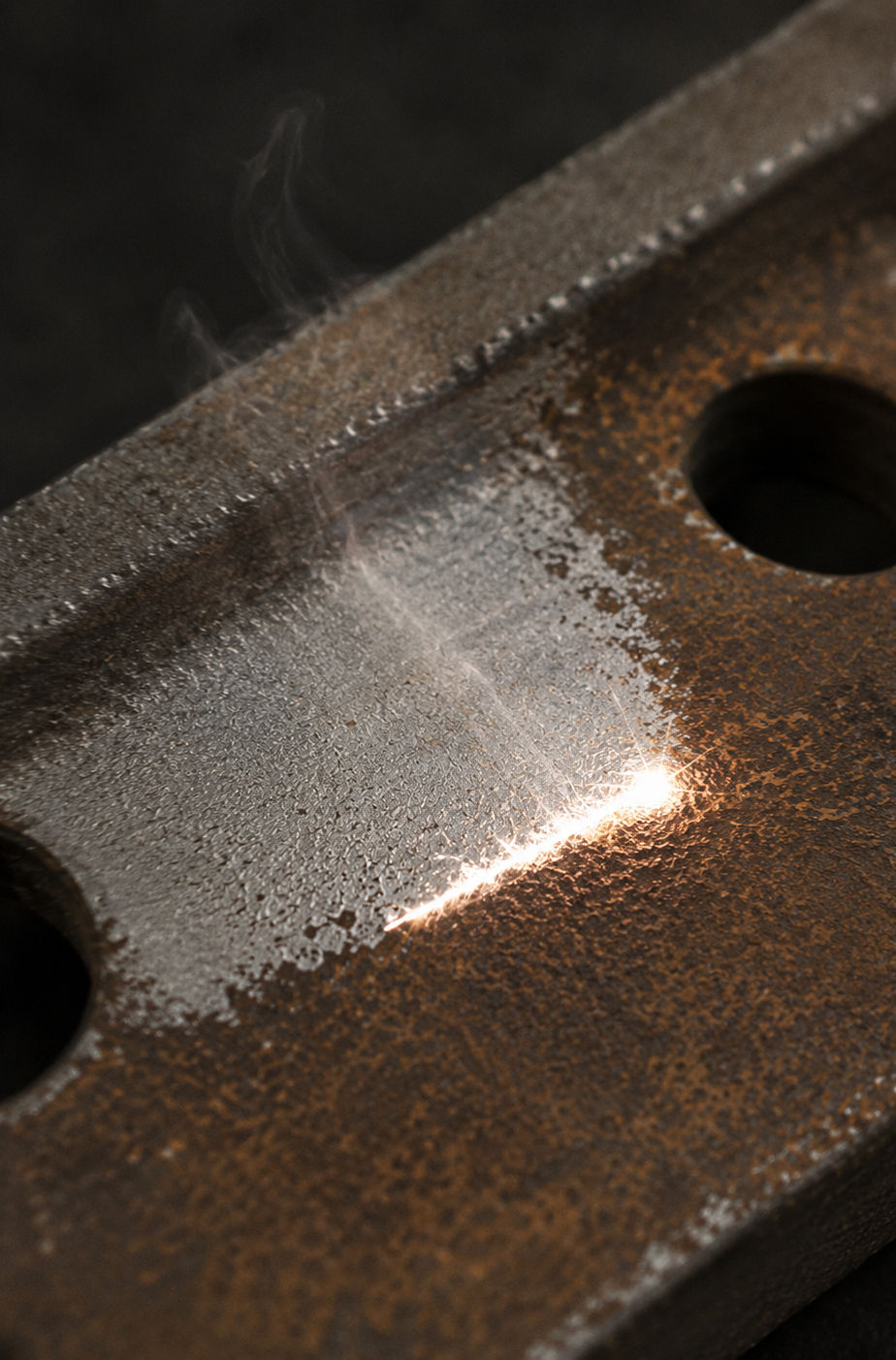
Laser rust removal - laser cleaning more broadly - uses short, controlled pulses of light to break rust, paint, and buildup away from a surface. The unwanted layer absorbs the energy and lifts off, and the settings are tuned to the material so the metal underneath is left intact. There are no abrasives, no chemicals, and no water. Fume from the process is captured at the source with extraction.
Laser rust removal vs. sandblasting
Sandblasting is a good tool, and it’s often faster and cheaper on large, simple surfaces. Laser cleaning wins in other situations:
Precision. It removes the coating without pitting or rounding off fine details, which matters on hardware, castings, and older pieces.
No media to clean up. There’s no grit to sweep up or contain, which helps in finished spaces and facilities with strict cleanliness rules.
No chemicals. There’s no stripper to handle, neutralize, or dispose of.
No disassembly. Items can often be cleaned in place, without taking them apart or masking surrounding parts like you would for sandblasting.
Portable. A mobile laser cleaning system can come to the job, so big or fixed items don’t have to be moved.

What can be laser cleaned?
Rust removal from hand tools, cast iron, car and motorcycle parts, rims, trailers, and equipment.
Paint and coating removal from door hardware, hinges, railings, and gates, including brass and other metals where preserving the original finish matters.
Industrial surfaces and structural steel, including coatings on steel framing and equipment in manufacturing and food facilities.
Weld preparation, cleaning seams and surfaces before welding or recoating.
Graffiti removal from brick, concrete, and metal, tested on a small area first.
Restore instead of replace
With steel costs under pressure, a clean, restored piece can mean getting years more out of a railing, a tool, a classic car part, or a piece of equipment you’d otherwise have to replace. Laser rust removal also keeps original details, markings, and shape, which is hard to match with new parts. Pro tip: finish the job with a protective coating, paint, or oil. Bare metal is clean but unprotected, and a good seal keeps it looking that way through Ontario’s winters.
When laser isn’t the right fit
Laser cleaning isn’t the answer to everything. It’s not suited to heavy grease buildup or non-stick coatings, plated or chrome finishes need careful testing, and sandblasting may be more economical on very large, flat surfaces. Older paint on pre-1980s items can also contain lead, so we test coatings before working on anything that might be affected. If laser isn’t the best option for your project, we’ll tell you.
Not sure which method suits your project? Download our one-page comparison of laser cleaning, sandblasting, chemical stripping, and sanding.
Laser cleaning & rust removal in Stoney Creek, Hamilton, and Grimsby
Rydex Laser is a local precision laser cleaning company serving Stoney Creek, Hamilton, Grimsby, and the surrounding area. Whether you have a rusty tool collection, hardware with decades of paint on it, a vintage car part, or a metal surface at your business, we can tell you whether laser cleaning is a good fit.
Frequently asked questions:
Does laser cleaning damage the metal? Not when it’s done right. Laser cleaning is non-contact, so there’s no grit or scrubbing to scratch, pit, or thin the metal. We match the settings to your material and test a small area first, so you can see the result before we clean the rest.
Can you clean brass and other soft metals? Yes. Brass, copper, and aluminum can all be cleaned, and brass in particular comes up bright once the tarnish, corrosion, or paint is gone. You may see a faint cross-hatch pattern from the laser’s scan path, which is normal.
How much does it cost? Pricing depends on the item, the surface area, and how heavily it’s coated. As a general rule of thumb, larger surfaces run around $10 per square foot, which is comparable to professional sandblasting once containment and cleanup are factored in. Smaller items are often priced per piece. Send us a photo for a quote.
Do you come to us? Absolutely. Our system is fully portable, so we can come to you. Have smaller items you’d rather drop off or have picked up? We can clean those at our shop too.
Have something rusty or painted that you’d rather restore than replace? Send a photo (or try our free instant estimator tool) and we’ll let you know if laser cleaning is a good fit.


Comments